
You wash your vehicle, dry it carefully, and then notice something frustrating: tiny orange or rust-colored spots scattered across the paint.
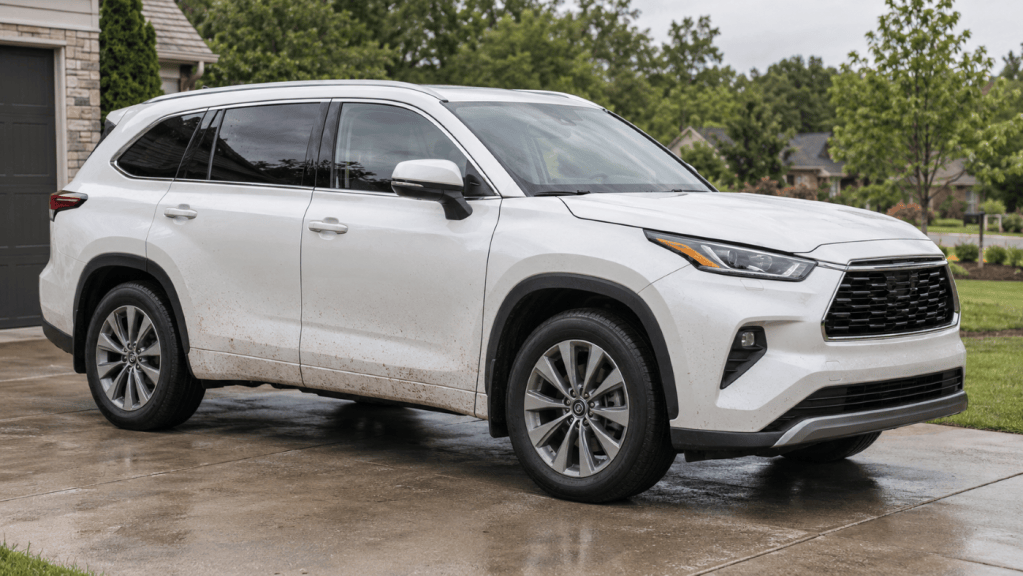
They are often easiest to see on white, silver, and other light-colored vehicles. You may find them along the lower doors, rear bumper, hatch, wheel arches, or anywhere exposed to road debris.
At first glance, it can look like the vehicle itself is beginning to rust. In many cases, however, those spots are actually caused by iron contamination bonded to the surface of the paint.
A normal car wash usually won’t remove it – and scrubbing harder can create an entirely different paint problem.
What Are the Tiny Orange Spots on Your Car?
Many of the orange spots drivers notice are tiny ferrous metal particles that have settled onto the vehicle’s clear coat.
These particles can come from several sources, including:
- Brake dust from your vehicle and surrounding traffic
- Road and industrial fallout
- Metal particles encountered during rail transportation
- Construction zones and heavily traveled roads
- Contamination collecting around wheels and lower body panels
Once these particles become attached to the paint, they are exposed to moisture and oxygen. As they oxidize, they develop the orange or rust-colored appearance that makes them easier to see.
This is commonly called iron contamination, industrial fallout, or rail dust.
White vehicles do not necessarily collect more iron contamination than darker vehicles. The contrast simply makes the orange particles much more noticeable.
Is It Iron Contamination or Actual Rust?
Not every orange spot should automatically be treated as surface contamination.
Iron contamination generally appears as numerous tiny orange dots resting on otherwise intact paint. Actual vehicle rust is more likely when the paint has been chipped, scratched through, bubbling, peeling, or exposing bare metal underneath.
Areas around damaged paint, panel edges, wheel wells, and older body repairs deserve especially careful inspection.
A professional detailer can evaluate the surface before beginning treatment. If the orange spots are bonded contamination, detailing may be able to remove them safely. If corrosion has started beneath damaged paint, the vehicle may require help from a qualified body shop instead.
Why Doesn’t a Regular Car Wash Remove the Spots?
Traditional washing is designed to remove loose dirt, dust, pollen, and road film from the surface.
Iron particles are different. They can become firmly bonded to the clear coat, which means soap and a wash mitt may pass directly over them without releasing them.
This is why a freshly washed vehicle can still:
- Have visible orange specks
- Feel rough when you gently touch the paint
- Look dull or contaminated in direct light
- Lack the smooth finish expected after washing
Repeatedly scrubbing the spots is not the answer. Aggressive rubbing or using an unsuitable household cleaner can scratch, stain, or otherwise damage the finish.
How Professional Iron Decontamination Works
At APC Detailing, iron removal is approached as part of a complete paint-decontamination process – not as an attempt to scrub individual spots away.
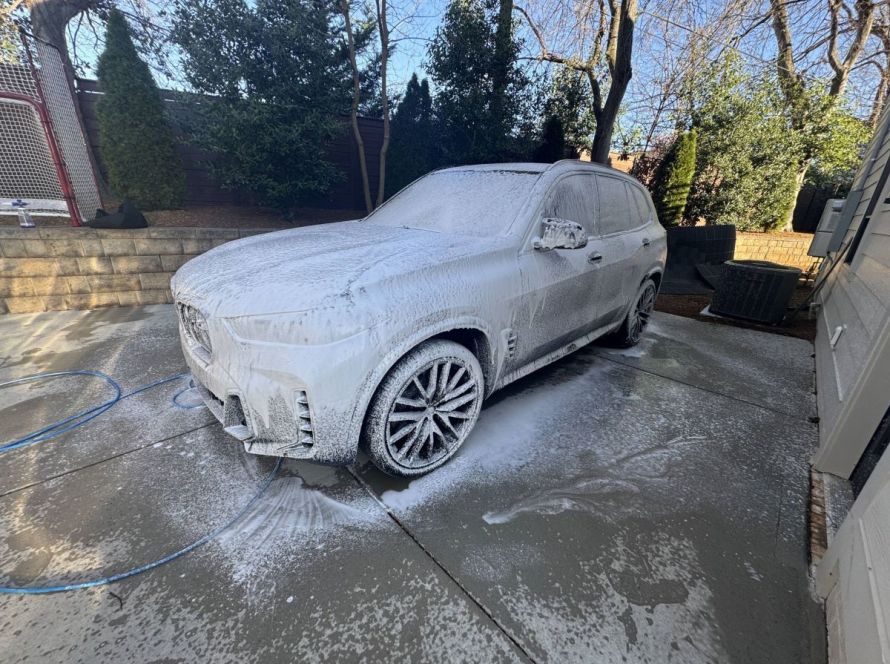
After the vehicle is carefully washed, an appropriate iron-removal product can be applied to help break down ferrous contamination. Many professional iron removers produce a red or purple reaction as they interact with metal particles.
The paint can then be evaluated for other bonded contaminants, such as road tar, tree sap, overspray, or stubborn environmental fallout.
When needed, a non-abrasive clay towel may be used to remove remaining contamination and leave the surface smoother. Using chemical decontamination first helps reduce the amount of mechanical contact required on the paint.
The exact process should always be adjusted to the condition of the vehicle. Some finishes need only decontamination, while others may show existing swirl marks, staining, water-spot etching, or scratches that require additional correction.
Is an Iron Remover the Same as a Clay Bar?
No. Iron removal and clay treatment address contamination in different ways.
An iron-removal product chemically reacts with ferrous particles so they can be released from the surface. Clay treatment mechanically removes bonded material that remains attached after washing.
Clay can be useful, but it is not automatically a substitute for iron decontamination. Using clay improperly—or repeatedly rubbing a contaminated surface—can leave fine scratches or marring that become especially noticeable on dark paint.
A complete decontamination process may use both methods in the proper order.
Can Iron Contamination Damage Car Paint?
Iron particles should not be ignored indefinitely.
As contamination remains on the vehicle and continues to oxidize, it can become more difficult to remove. Accumulated contamination can also leave the finish feeling rough and interfere with the appearance and performance of waxes, sealants, and ceramic coatings.
Removing the contamination does not guarantee that every mark beneath it will disappear. If particles have remained for an extended period, or if the surrounding clear coat is already stained or damaged, polishing may be necessary to improve the finish.
That is why the paint should be inspected after decontamination rather than assuming every orange mark needs aggressive correction.
Should You Remove Iron Contamination Before Waxing or Ceramic Coating?
Yes. Paint protection works best when it is applied to a properly cleaned and prepared surface.
Applying wax, sealant, or ceramic coating over bonded contamination can trap surface defects beneath the protection and prevent the product from bonding as evenly as intended.
Professional preparation may include:
- A thorough hand wash
- Iron decontamination
- Tar and sap removal when needed
- Mechanical decontamination with a clay towel
- Paint inspection
- Polishing or paint correction when appropriate
- Application of the selected paint protection
Not every vehicle needs full paint correction before receiving protection. The right preparation depends on the condition of the paint and the result the owner wants to achieve.
If scratches or swirl marks remain after decontamination, our guide to paint-correction costs in Charlotte explains the difference between paint enhancement and more intensive correction.
APC’s Exterior Decontamination Detail
For vehicles with rough paint, orange spots, road tar, tree sap, or other bonded contamination, APC Detailing offers an Exterior Decontamination Detail.
The service includes:
- Deionized-water hand detailing
- Cleaning of door jambs
- Iron decontamination
- Tree sap and road-tar removal
- Non-abrasive clay-towel treatment
- Wheel-face, barrel, and wheel-well cleaning
- Exterior glass and mirror cleaning
- Tire dressing and UV protection for exterior plastics
- SiO₂-infused wax protection lasting up to four months
Current package prices begin at:
| Vehicle size | Starting price |
|---|---|
| Sedan | $230 |
| Two-row SUV or midsize truck | $260 |
| Three-row SUV, full-size truck, or minivan | $290 |
| Extra-large truck, SUV, or Wrangler | $320 |
Final recommendations depend on the vehicle’s size and condition. Heavy contamination, water-spot damage, staining, or paint defects may require additional treatment.
You can review current options and availability through our online booking page.
How Often Should Your Vehicle Be Decontaminated?
There is no single schedule that applies to every vehicle.
A vehicle may need decontamination more frequently if it is parked outside, driven in heavy traffic, exposed to construction or industrial activity, stored near railroad tracks, or driven long distances for work.
Useful warning signs include paint that feels rough after washing, visible orange specks, stubborn road film, and protection that no longer behaves evenly across the surface.
Periodic inspection is more useful than automatically claying or chemically treating the paint on a fixed schedule.
Frequently Asked Questions
Are orange spots on a white car always rust?
No. Tiny orange dots on otherwise intact paint are frequently caused by oxidizing iron particles bonded to the clear coat. However, bubbling paint, exposed metal, or corrosion around a chip may indicate actual rust and should be inspected.
Will a car wash remove iron contamination?
Usually not. A regular wash removes loose surface dirt, but embedded iron particles often require a dedicated chemical decontamination process.
Can I scrub the orange spots off?
Scrubbing is not recommended. Aggressive rubbing can scratch or mar the clear coat while failing to remove the contamination completely.
Does clay remove iron particles?
Clay can remove some bonded contamination mechanically, but a dedicated iron remover is designed specifically to react with ferrous particles. Depending on the vehicle, both methods may be used.
Will decontamination remove scratches and swirl marks?
No. Decontamination removes material bonded to the surface. Scratches and swirl marks are defects in the paint or clear coat and may require polishing or paint correction.
Can a ceramic coating be applied after decontamination?
Yes, provided the paint is properly prepared and inspected first. Any polishing or paint correction should be completed before the coating is installed.
Get a Professional Paint Assessment
Those tiny orange spots may not mean your vehicle is rusting, but they are a sign that ordinary washing is no longer enough.
APC Detailing provides mobile exterior detailing and paint decontamination throughout Fort Mill, Charlotte, and surrounding communities. Owner Jonathan is an IDA Certified Detailer with Skills Validated credentials, and APC arrives with the water, power, equipment, and professional products needed to complete the service at your location.
If your paint looks spotted, feels rough, or no longer shines the way it should, schedule an assessment before reaching for an abrasive cleaner or scrub pad.
Prefer to chat first? No problem, Contact Us Here or Call us at 704-654-2042